






Winter Parking Heating Without Mishaps! Nanny-Level Guide to 5KW All-in-One Diesel Heaters: Selection + Installation + Pitfall Avoidance
How tough is parking heating in winter? New energy vehicle owners dread their range being halved when switching on the heater; truck drivers have to huddle under thick quilts to endure the cold during late-night parking; and when camping in a motorhome, the tent can be even colder than outside… Idling the engine to warm up sends fuel consumption soaring and damages the engine; electric heaters either lack sufficient power or drain the battery completely.
That was until I discovered the “5KW all-in-one parking heater”—a game-changer that completely solves winter parking heating woes. Not only is it energy and fuel efficient, but it also adapts to multiple scenarios like vehicles and outdoor use, with hassle-free installation. Today, I’ll share this nanny-level guide covering everything from basic understanding and selection to installation and usage, helping you steer clear of all pitfalls!
I. Basic Understanding: What Exactly is a 5KW All-in-One Parking Heater?
1.1 Core Definition: An Integrated Fuel-Powered Heating “Black Technology”
In simple terms, a 5KW all-in-one parking heater is a heating device that integrates fuel combustion, heat dissipation, temperature control, and other functions. Featuring an “all-in-one design,” it differs from the scattered components of split-type heaters. With a compact size (common models measure approximately 360*240*230mm, similar to a small suitcase), it’s much easier to move and install.
It primarily uses diesel as fuel to heat air for warmth, supporting multi-mode adaptation to 12V/24V vehicle power and 220V household electricity. It can be installed in vehicles or used independently outdoors, in work sheds, and other scenarios—truly a “portable heater.”
1.2 Core Parameters: Master These 4 to Avoid Wrong Purchases
Parameters are crucial when choosing a device. These 4 key points directly determine your user experience—beginners, take note:
Rated power: 5KW: A quick-heating powerhouse for small spaces. Whether it’s a truck cab, motorhome bedroom, or a 10-20㎡ camping tent, it heats up rapidly, so you won’t have to endure the cold while waiting.
Ultra-low fuel consumption: Only 0.3L of diesel per hour. Based on current diesel prices, the cost for 8 hours of heating is less than $10—far more economical than idling the engine (which consumes at least 1L per hour).
Low power draw: It only uses 30W of electricity during operation. New energy vehicle owners can use it without significantly reducing range, and fuel vehicle owners won’t have to worry about battery drain when connecting to the car battery.
Low-temperature startup capability: High-quality models can start normally at -40℃, making them reliable even in frigid regions like Northeast and Northwest China—no more struggling with failed startups in freezing weather.
II. Scenario Highlights: More Than Just for Vehicles! 3 Scenarios Where It Shines
I initially thought it was only for vehicles, but later discovered its wide adaptability—one device meets multiple needs:
2.1 Vehicle Use: A Winter Necessity for Trucks, Motorhomes, and New Energy Vehicles
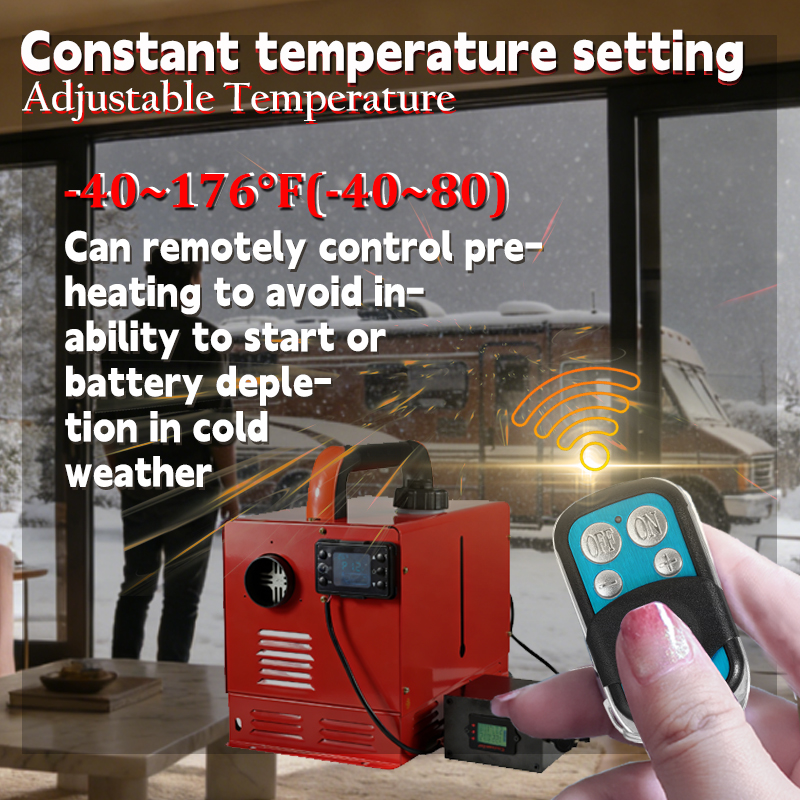
Truck drivers parking for rest late at night can connect the heater to the battery—heating costs less than $1.5 for the whole night. With remote start, they can pre-warm the cab in advance and step into a cozy space.
Motorhome enthusiasts can’t live without it. Paired with an independent air conditioner, it achieves “free control of heating and cooling.” For example, models like the SAIC Maxus Traveler RVLIVE V70 stay at a stable temperature whether you’re resting or cooking inside.
New energy vehicle owners know range anxiety all too well—winter heater use can cut range in half. This all-in-one heater doesn’t consume power from the traction battery, so range remains nearly unaffected. No more hesitating to drive far for fear of losing warmth.
2.2 Outdoor Use: A “Portable Heat Source” for Winter Camping
For winter camping or plateau camping lovers, this is a must-try! Models with built-in power supplies don’t require external household electricity—just add diesel and use. Its compact size saves tent space, and it can raise the tent temperature above 15℃ even at -20℃. No more enduring the cold with just a sleeping bag—camping comfort is elevated instantly.
2.3 Other Scenarios: A “Warmth Essential” for Small Work Sheds and Outdoor Stalls
Heating is also a big issue for outdoor construction work sheds and roadside stalls in winter. The 220V model can be used by connecting to household electricity—no complex installation required, making outdoor work much more comfortable.
Heating is also a big issue for outdoor construction work sheds and roadside stalls in winter. The 220V model can be used by connecting to household electricity—no complex installation required, making outdoor work much more comfortable.
III. Advantage Summary: 3 Core Highlights Loved by Experienced Users
After using it, I understand why experienced drivers swear by 5KW all-in-one heaters—these 3 advantages perfectly address pain points:
3.1 Energy-Saving & Fuel-Efficient: The Pinnacle of Low-Cost Heating
Compared to traditional heating methods, its cost-effectiveness is unmatched:
- Idling the engine: 1-2L of fuel per hour, costing $1.5-$3.
- Electric heaters: 1-2 kWh of electricity per hour, unusable outdoors without power.
- 5KW all-in-one heater: Only 0.3L of fuel and 20W of electricity per hour. Both fuel and electricity costs are negligible.
3.2 Easy Installation: Beginners Can Do It Without Modifying the Vehicle
What impresses me most is its “installation-free design”—no need to modify the original vehicle wiring. The core steps are just 3:
- Add diesel.
- Connect power (via the original cigarette lighter, direct battery connection, or external household electricity).
- The exhaust pipe outside the vehicle.
All accessories are included. Even beginners with poor hands-on skills can finish in 10 minutes by following the manual. For fixed installation, simply choose a flat, well-ventilated location away from high-temperature, flammable components—saving the hassle of bracket installation and oil pipe connection required for split-type heaters.
3.3 Strong Adaptability: Compatible with Multiple Vehicles and Scenarios
- 12V: Suitable for passenger cars and small motorhomes.
- 24V: Suitable for trucks and large motorhomes.
- 220V: Suitable for home use and work sheds.
One device meets diverse needs—whether you’re a truck driver, motorhome enthusiast, or outdoor adventurer, it offers unbeatable value for money.
IV. Selection Guide: Avoid Pitfalls! Brand Recommendations + Key Tips
The market is flooded with mixed-quality models. Low-cost, shoddy products often have false power claims or carbon monoxide leakage risks. Below are trusted brands and purchasing tips—follow these to make the right choice:
The market is flooded with mixed-quality models. Low-cost, shoddy products often have false power claims or carbon monoxide leakage risks. Below are trusted brands and purchasing tips—follow these to make the right choice:
4.1 Professional Brands: Prioritize Quality
If you have a higher budget and value durability, opt for professional brands:
WARMCONFOR: Specialized in parking heaters for 6 years. Its products operate stably at -40℃, suitable for high-end scenarios like motorhomes, cars, and yachts—offering exceptional durability and low-temperature adaptability.
4.2 Purchasing Pitfalls to Avoid: Focus on These 3 Points
Confirm voltage first: Choose 12V/24V/220V based on your vehicle or usage scenario—choosing the wrong voltage makes it unusable.
Prioritize remote start: Pre-warm without getting out of the car in winter for a much better experience.
Buy from regular channels: Purchase from official flagship stores or authorized offline retailers to ensure installation guidance and after-sales service. Avoid low-quality products with no after-sales support.
V. Installation & Usage: Safety First! Don’t Ignore These Notes
While the all-in-one heater is excellent, safe usage is paramount. Remember these points to avoid accidents:
5.1 Installation Tips: Installation-Free ≠ Usage Without Rules
The core requirement: The exhaust pipe must be extended outside the vehicle/room! Whether used in a car or tent, ensure exhaust gases are discharged smoothly to prevent carbon monoxide accumulation.
For fixed installation:
- Keep it away from high-temperature, flammable components like the engine and fuel tank.
- Choose a flat, well-ventilated location.
- Ensure secure wiring connections without modifying the original vehicle wiring.
- If unsure, seek help from professional auto repair personnel for peace of mind.
5.2 Usage Taboos: Never Make These 4 Mistakes
- Do not use it for extended periods in poorly ventilated environments like garages or airtight tents—even with a small gap, the risk of carbon monoxide poisoning is extremely high.
- Only use clean diesel to avoid fuel line clogging from impurities, which affects device performance.
- Check that the exhaust pipe connection is secure and free of damage before starting to prevent exhaust gas backflow.
- For new energy vehicles, prioritize external power supply to minimize vehicle battery drain.
5.3 Maintenance: Key to Extending Service Life
- Simple maintenance keeps the device running longer:
- Clean the filter regularly to ensure air circulation.
- Inspect oil pipes and wires for damage or loosening after each use.
- Drain remaining fuel when not in use for a long time to prevent fuel line clogging.
- Conduct regular full-machine inspections as per the manual to ensure functions like constant temperature control and abnormal protection work properly.
VI. Summary: Choose the Right 5KW All-in-One Heater for Worry-Free, Cost-Effective Winter Heating
In short, the 5KW all-in-one parking heater is a must-have gadget for winter parking and outdoor heating—energy-saving, fuel-efficient, easy to install, and highly adaptable. Whether you’re a truck driver, motorhome enthusiast, or outdoor lover, it solves all your heating troubles.
When choosing:
- Select the voltage based on your scenario first.
- Pick a brand according to your budget.
- Buy from regular channels.
When using:
- Always prioritize ventilation.
- Perform simple maintenance regularly.
With these steps, you can enjoy a warm, comfortable winter without hassle!