






Haben Sie genug von träger Heizung, nervigen Klappergeräuschen und verschwendetem Kraftstoff? Das Lüfterrad Ihrer Standheizung ist der Übeltäter (und die Lösung).
The unsung workhorse that controls every bit of your winter on-road comfort—here’s everything you need to know
If you’re a long-haul trucker, full-time van lifer, RV adventurer, or off-road enthusiast braving cold weather, your parking heater is non-negotiable. It keeps your cab warm, defrosts your windshield, and preps your engine for frigid mornings—all without idling your main engine and burning through expensive fuel. But here’s the thing: most people fixate on a heater’s brand, wattage, or price tag, and completely overlook its hardest-working, most critical internal part: the fan wheel assembly.
This seemingly small, unassuming component is the beating heart of your parking heater. It directly controls how fast your space heats up, how quiet the unit runs, how much fuel and battery it uses, and even how long your entire heater will last. Today, we’re breaking down everything you need to know about this unsung hero, so you can stop wasting money, avoid frustrating breakdowns, and lock in reliable, cozy warmth all winter long.
What Even Is a Fan Wheel Assembly, And Why Does It Matter So Much?
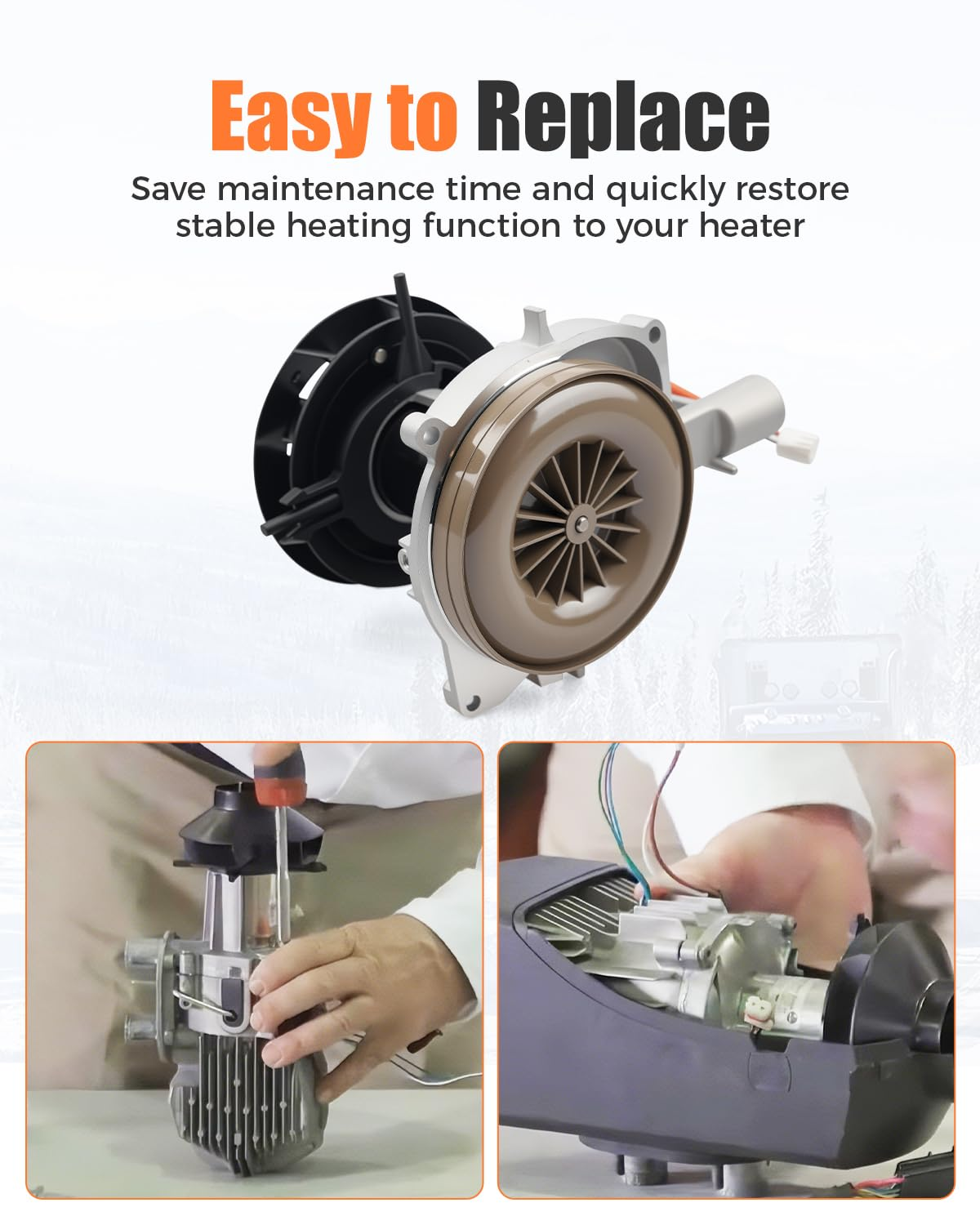
At its core, a parking heater works by burning fuel to create heat, then circulating that warm air into your space. The fan wheel assembly is the part that makes that entire air cycle happen—it’s literally the heater’s lungs and circulatory system, all in one. It’s made up of two key, non-negotiable parts that work in perfect sync: the combustion fan wheel and the circulation blower fan wheel.
The combustion fan wheel is in charge of delivering precise, consistent airflow to the heater’s combustion chamber. It dials in the perfect air-to-fuel ratio to make sure your fuel burns completely and cleanly. Without it, you’ll end up with incomplete burn, carbon buildup, unexpected shutdowns, or even wasted fuel from too much excess air. The circulation blower wheel, on the other hand, is what actually pulls cold air from your cab or RV, runs it over the heater’s hot heat exchanger, and pushes that toasty, warm air back out into your space. It’s the part that dictates how fast you warm up, how far the heat spreads, and how consistent the temperature stays.
Put simply: if your fan wheel assembly isn’t working right, your heater can’t work right. Even the most premium, top-of-the-line heater will struggle with slow heating, loud noise, sky-high fuel use, and constant breakdowns if its fan wheel is cheap, damaged, or worn out.
What Makes a High-Quality Fan Wheel Assembly? These 4 Non-Negotiables
The market is flooded with fan wheel assemblies of all kinds, but a good one isn’t just “a wheel that spins”. It’s precision-engineered to hold up to constant use, extreme heat, and the rough conditions of life on the road. Here’s what separates the best from the cheap, unreliable knockoffs:
1. Heavy-duty, heat-resistant build that won’t quit
Parking heaters run at extremely high internal temperatures, and cheap parts can’t handle the heat. Low-quality fan wheels are made with flimsy, generic plastic that warps, cracks, melts, or becomes brittle after just a few months of regular use. Not only does this kill airflow, but it can also scrape against the heater housing, cause loud rattles, and even seize up the motor entirely.
Top-tier fan wheel assemblies are built with high-strength, heat-resistant engineering polymers or reinforced alloy materials. They’re designed to withstand constant high-temperature operation without warping, degrading, or corroding, even with daily, year-round use for long hauls or full-time van life. They last exponentially longer than cheap plastic alternatives, and save you from constant replacements.
2. Precision dynamic balancing for whisper-quiet operation
Nothing ruins a cold night’s sleep faster than a loud, humming, vibrating heater—and it all comes down to the fan wheel’s balance. Cheap, mass-produced wheels have shoddy molding, uneven blades, and major center-of-gravity flaws. When they spin at high speeds, they create intense vibration, annoying buzzing, and loud resonance, while also wearing out your heater’s motor bearings at a rapid rate.
High-quality fan wheels go through rigorous precision dynamic balancing before they ever leave the factory. Every blade is evenly spaced and aligned, with a perfectly centered rotation to eliminate vibration. Many premium models even use uneven blade spacing to cut down on resonance and hum, so they run smooth and near-silent—even when you’re running the heater through the night in a small van or truck cab.
3. Aerodynamic design for faster heat and better fuel efficiency
The shape, angle, and spacing of a fan wheel’s blades aren’t random—they’re engineered to move as much air as possible, with as little effort from the motor as possible. Cheap fan wheels have poorly designed blades that create massive air resistance, low airflow, and extra strain on your heater’s motor. This means your heater has to work harder, run longer, and burn more fuel just to heat up your space, with underwhelming results.
The best fan wheels use optimized aerodynamic, fluid-dynamic blade design, with curves and spacing perfectly tuned to the way air flows through your heater. This cuts down on drag, boosts airflow dramatically, and reduces the load on your motor. The payoff? Faster heat-up times, more consistent warm air, and lower fuel and battery drain—saving you money at the pump with every use.
4. Precision fit and airtight seals to eliminate wasted heat
A fan wheel that doesn’t fit right is just as bad as a cheap one. Premium fan wheel assemblies are precision-machined to match original equipment manufacturer (OEM) specs exactly, for a perfect, snug fit every time. They come with tight, durable seals that stop hot air from leaking out, and cold air from seeping in—so every bit of heat your heater makes goes straight into your cab, not wasted into the engine bay.
That tight fit also has a secondary benefit: it keeps dust, dirt, lint, and road debris out of the heater’s internal housing. This reduces buildup on the blades and in the combustion chamber, cuts down on clogs and jams, and means less maintenance and fewer breakdowns down the line.
Buyer Beware: Avoid These Costly Mistakes When Shopping for a Fan Wheel Assembly
It’s tempting to grab the cheapest fan wheel you can find to save a few bucks upfront, but this is one of the biggest mistakes you can make with your parking heater. Cheap, low-quality parts will end up costing you way more in the long run, in fuel waste, motor damage, and even full heater replacement. Here’s our top advice to avoid getting burned:
⚠️ CRITICAL WARNING
Cheap, no-name knockoff fan wheels might save you a little money today, but they will wreck your heater’s motor, combustion chamber, and other core components. The repair or replacement bill for a ruined heater will be 10x more than the cost of investing in a quality fan wheel from the start. Don’t leave yourself stranded in the cold to save a few dollars.
- Stick to reputable, trusted brands and manufacturers:
- Avoid unbranded, untested parts with no listed specs, fitment info, or quality guarantees. Look for parts from brands with a proven track record in the parking heater space, and always check reviews from other truckers and van lifers.
- Always double-check fitment before you buy:
- Fan wheels are not one-size-fits-all. Different heater brands, wattages, and models use different wheel sizes, shaft diameters, and mounting specs. Always confirm the part is compatible with your exact heater model before ordering—wrong fit means poor performance, air leaks, or even total heater failure.
- Feel the quality before you install:
- A high-quality fan wheel will feel solid and heavy in your hand, with smooth, burr-free blades and a sturdy build. It should spin freely, with no snags, binding, or rattling. Cheap wheels feel flimsy and lightweight, have rough, uneven edges, and will often catch or bind when you spin them by hand.
Easy Maintenance Tips to Extend Your Fan Wheel’s Life (And Keep Your Heater Running Like New)
Your fan wheel assembly is a wear-and-tear part, but a little regular maintenance goes a long way to keep it running smoothly, preserve its efficiency, and extend its lifespan. These simple, quick steps take just a few minutes, and will save you from costly breakdowns:
- Clean dust and debris regularly:
- Over time, dust, lint, pet hair, and road gunk will build up on your fan wheel’s blades and inside the housing. This buildup adds weight, throws off the wheel’s balance, increases air resistance, and kills airflow. We recommend taking apart the housing and cleaning the blades and wheel every 1-2 months with a soft brush or compressed air, to keep the airflow clear and the wheel balanced.
- Keep moisture out to prevent rust and degradation:
- When your heater isn’t in regular use, keep your cab, van, or RV as dry as possible. Moisture and humidity can cause the wheel’s metal components to rust, and break down plastic materials over time. In wet, humid months, run your heater for 5-10 minutes every couple of weeks to dry out any internal moisture and prevent damage.
- Replace worn or damaged parts immediately:
- If you start noticing new rattles, excessive vibration, slower heat-up times, or a sudden spike in fuel use, don’t keep running your heater! Turn it off, inspect the fan wheel for warping, cracks, worn blades, or damage, and replace it right away if you spot issues. Running a damaged fan wheel will quickly ruin your heater’s motor and combustion chamber, leading to a way more expensive repair.
- Install it correctly the first time:
- When replacing your fan wheel, always make sure it’s mounted securely, perfectly aligned, and tightened to the manufacturer’s specs. A misaligned or loose wheel will scrape against the housing, bind up, wear out fast, and throw off the balance. Always do a quick, empty test run after installation to make sure it spins smoothly, quietly, and with no issues before you hit the road.
Wrapping Up
Your parking heater is your lifeline on cold winter trips, and the fan wheel assembly is the unsung hero that keeps it running right. It controls every part of your heater’s performance: how fast you warm up, how quiet it runs, how much fuel you burn, and how long the entire unit will last.
Whether you’re installing a brand new parking heater, or replacing a worn-out part on your existing unit, don’t cut corners on the fan wheel assembly. Investing in a high-quality, well-built wheel means reliable, quiet, efficient heat all winter long—no more cold nights, no more annoying rattles, no more wasted money at the fuel pump.
For more parking heater maintenance tips, buying guides, and winter on-road hacks, follow our page. We’re here to help you stay warm, safe, and on the road, no matter the weather.